

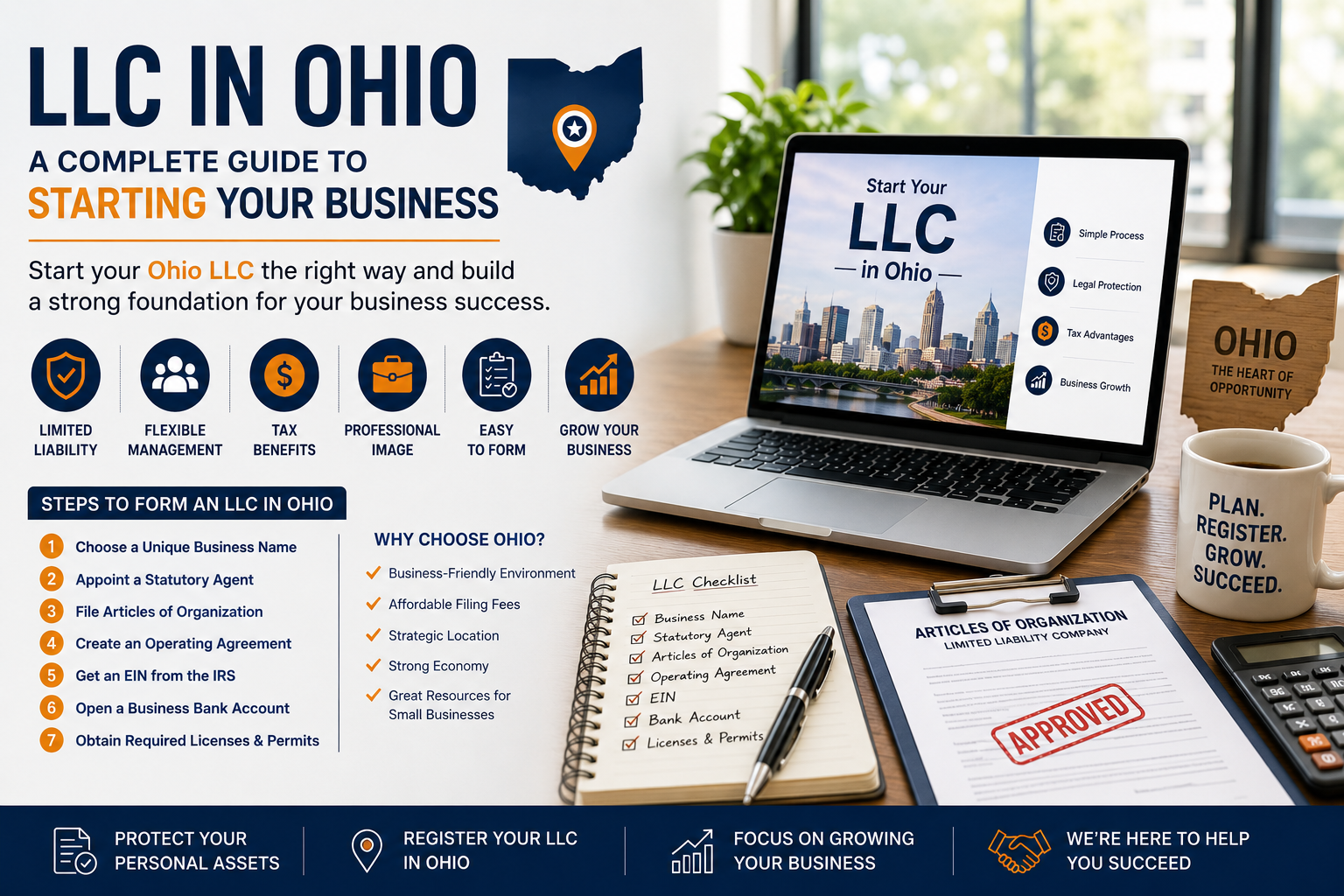
Starting a business is an exciting journey, and choosing the right business structure is one of the first important decisions. Many entrepreneurs choose an LLC in Ohio because it combines legal protection with simple management and flexible tax options. Whether you plan to start a small local business, an online store, or a professional service, forming an LLC can provide a strong foundation for future growth.
An LLC, or Limited Liability Company, helps separate your personal assets from your business responsibilities. This means that in many situations, your personal savings, home, or other personal property are protected if the business faces legal or financial problems. At the same time, an LLC is generally easier to manage than a corporation and offers flexibility for business owners.
Ohio has become a popular state for entrepreneurs because of its business-friendly environment, straightforward registration process, and supportive resources for small businesses. The state allows both residents and non-residents to form an LLC, making it an attractive option for many business owners across the United States.
This guide explains everything you need to know about forming an LLC in Ohio, including eligibility, legal requirements, filing steps, costs, taxes, ongoing responsibilities, and practical tips for long-term success. The information is based on official Ohio business registration requirements and is intended for educational purposes.
What Is an LLC?
An LLC (Limited Liability Company) is a legal business structure that combines features of both a corporation and a sole proprietorship or partnership. It creates a separate legal entity for your business while allowing flexible management and taxation.
The biggest advantage of an LLC is liability protection. Since the business is legally separate from its owners, personal assets are generally protected from business debts and legal claims.
Many different types of businesses choose this structure, including:
- Retail stores
- Online businesses
- Consulting firms
- Freelancers
- Contractors
- Marketing agencies
- Restaurants
- Technology companies
- Professional service providers
An LLC can have one owner (Single-Member LLC) or multiple owners (Multi-Member LLC).
Why Choose an LLC in Ohio?
Many entrepreneurs choose Ohio because it offers a simple business registration process and a supportive environment for new businesses.
Some advantages include:
Limited Personal Liability
One of the main reasons people form an LLC is personal asset protection. In many situations, business debts remain separate from personal finances.
Flexible Management
Unlike corporations, LLCs have fewer management requirements. Owners can manage the business themselves or appoint managers.
Tax Flexibility
By default, LLC income usually passes directly to the owners instead of being taxed at the company level. Depending on business needs, an LLC may also choose different federal tax classifications where permitted.
Professional Image
Customers, suppliers, and lenders often view an LLC as more established than an unregistered business.
Easy Formation Process
Ohio provides a straightforward filing process for creating an LLC compared to many other business structures.
Who Can Form an LLC in Ohio?
Almost anyone who meets legal requirements can create an Ohio LLC.
This includes:
- Ohio residents
- Residents of other U.S. states
- Foreign individuals (subject to applicable laws and tax requirements)
- Small business owners
- Entrepreneurs
- Investors
- Partnerships converting to an LLC
The business must follow Ohio state laws and submit the required registration documents.
Basic Requirements for Forming an LLC in Ohio
Before filing, several important decisions must be made.
Choose a Business Name
Your LLC must have a unique name that is different from existing registered businesses in Ohio.
Generally, the name must include one of the following:
- Limited Liability Company
- Limited Company
- LLC
- L.L.C.
- Ltd.
The chosen name should not mislead the public or conflict with existing registered entities.
Appoint a Statutory Agent
Ohio requires every LLC to appoint a Statutory Agent (also called a registered agent in many states).
The agent receives:
- Legal notices
- Government correspondence
- Court documents
- Official state communications
The statutory agent must have a physical address in Ohio and agree to accept these responsibilities.
Decide on Your Business Purpose
Although Ohio does not require a lengthy business description, you should clearly understand what products or services your company will provide.
Examples include:
- Digital marketing
- Construction services
- Graphic design
- Retail sales
- Software development
- Consulting
- Healthcare services (subject to licensing requirements)
- Educational services
Determine Ownership Structure
Before registration, decide:
- Who owns the business?
- What percentage does each owner hold?
- Who manages daily operations?
- How will profits be distributed?
Answering these questions early helps avoid future disagreements.
Important Documents You May Need
Although requirements vary depending on your business, many new LLC owners prepare the following:
- Business name
- Principal business address
- Statutory Agent information
- Owner information
- Business purpose
- Articles of Organization
- Operating Agreement (recommended even if not required)
Preparing these documents in advance makes the filing process much smoother.
Step-by-Step Process to Form an LLC in Ohio
Once you have chosen your business name and prepared the required information, you can begin the registration process.
Step 1: Check Business Name Availability
Before filing your LLC, search the Ohio business name database to make sure your desired name is available and follows state naming rules.
A unique business name helps avoid registration delays and legal conflicts.
Step 2: File the Articles of Organization
The Articles of Organization officially create your LLC.
This document generally includes:
- LLC name
- Business address
- Statutory Agent information
- Effective date (if different from the filing date)
- Signature of the organizer
After approval by the Ohio Secretary of State, your LLC officially becomes a registered business.
Step 3: Appoint Your Statutory Agent
Every Ohio LLC must maintain a Statutory Agent.
The agent must:
- Have a physical address in Ohio
- Be available during normal business hours
- Accept official legal documents on behalf of the company
You may serve as your own agent if you meet Ohio’s legal requirements, or you can hire a professional registered agent service.
Step 4: Create an Operating Agreement
Ohio generally does not require an Operating Agreement to be filed with the state, but it is strongly recommended.
An Operating Agreement explains:
- Ownership percentages
- Member responsibilities
- Voting rights
- Profit distribution
- Management structure
- Procedures if an owner leaves
Even single-member LLCs benefit from having this document because it helps separate personal and business affairs.
Step 5: Apply for an EIN
An Employer Identification Number (EIN) is issued by the Internal Revenue Service (IRS).
Many businesses need an EIN to:
- Open a business bank account
- Hire employees
- File federal taxes
- Apply for certain business licenses
Single-member LLCs without employees may not always require one, but obtaining an EIN is often recommended.
Step 6: Open a Business Bank Account
Keeping business and personal finances separate is one of the most important practices for LLC owners.
A dedicated business bank account helps:
- Track expenses
- Simplify bookkeeping
- Prepare tax returns
- Maintain liability protection
How Much Does It Cost to Start an LLC in Ohio?
The total cost depends on your business needs.
Common expenses may include:
- State filing fee
- Registered agent service (if hired)
- Business licenses or permits
- Domain name and website
- Business insurance
- Accounting software
- Professional legal or tax advice (optional)
Because government fees can change, always verify the current filing fee before submitting your application.
Business Licenses and Permits
Creating an LLC does not automatically authorize every type of business activity.
Depending on your industry, you may need:
- Local business licenses
- Professional licenses
- Sales tax registration
- Health permits
- Building permits
- Employer registrations
Requirements vary by city, county, and industry.
Taxes for an Ohio LLC
Taxes depend on several factors, including business type, ownership structure, and federal tax classification.
An Ohio LLC may need to consider:
Federal Taxes
Federal tax obligations depend on how the LLC is taxed under IRS rules.
State Taxes
Certain businesses may have state tax responsibilities depending on their activities.
Sales Tax
Businesses selling taxable goods or certain services may need to register for sales tax.
Employer Taxes
If your LLC hires employees, additional payroll and employment tax responsibilities may apply.
Because tax situations vary, consulting a qualified tax professional can be helpful.
Annual Responsibilities
Although Ohio has fewer ongoing requirements than some states, LLC owners should continue to maintain good business records.
Recommended practices include:
- Keeping financial records organized
- Updating business information when needed
- Renewing required licenses
- Filing taxes on time
- Maintaining a Statutory Agent
- Following federal, state, and local regulations
Good recordkeeping supports long-term business success and compliance.
Common Mistakes to Avoid
Many new business owners make avoidable mistakes during the formation process.
Some common examples include:
Choosing an Unavailable Business Name
Always confirm name availability before preparing documents.
Mixing Personal and Business Money
Using one bank account for everything can create accounting problems and weaken liability protection.
Ignoring Required Licenses
Some businesses need permits before operating legally.
Skipping an Operating Agreement
Even when not legally required, this document helps prevent future disputes.
Forgetting Tax Responsibilities
Understanding federal, state, and local tax obligations helps avoid penalties and unnecessary stress.
Conclusion
Starting an LLC in Ohio is a practical choice for many entrepreneurs who want liability protection, flexible management, and a professional business structure. Whether you are launching a small local business, an online store, or a growing company, an LLC can provide a solid legal foundation while helping separate your personal and business finances.
The process generally involves choosing a unique business name, appointing a statutory agent, filing the Articles of Organization with the Ohio Secretary of State, obtaining an EIN if needed, and keeping your business compliant with applicable laws and tax requirements. Although the process is straightforward, taking time to understand each step can help you avoid common mistakes and save time in the future.
As your business grows, maintaining accurate financial records, renewing any required licenses, and following federal, state, and local regulations will help keep your LLC in good standing. If your business has complex legal or tax needs, seeking advice from a qualified attorney or tax professional is a wise decision.
By understanding the requirements and planning carefully, you can confidently establish an LLC in Ohio and focus on building a successful business.
FAQ Section
1. What is an LLC in Ohio?
An LLC (Limited Liability Company) is a legal business structure that helps protect the owner’s personal assets while offering flexible management and tax options.
2. How much does it cost to start an LLC in Ohio?
The cost includes the state filing fee and may also include expenses such as a statutory agent service, business licenses, website setup, and other business-related costs. Always check the official Ohio Secretary of State website for the latest filing fee.
3. Do I need an Operating Agreement for an Ohio LLC?
Ohio generally does not require you to file an Operating Agreement, but creating one is strongly recommended because it outlines ownership, management responsibilities, and business procedures.
4. Do I need an EIN for my Ohio LLC?
Many LLCs need an Employer Identification Number (EIN), especially if they hire employees, open a business bank account, or file certain federal tax returns.
5. Can one person own an LLC in Ohio?
Yes. Ohio allows both Single-Member LLCs and Multi-Member LLCs. A single individual can own and manage an LLC while receiving the legal protections provided by this business structure.