

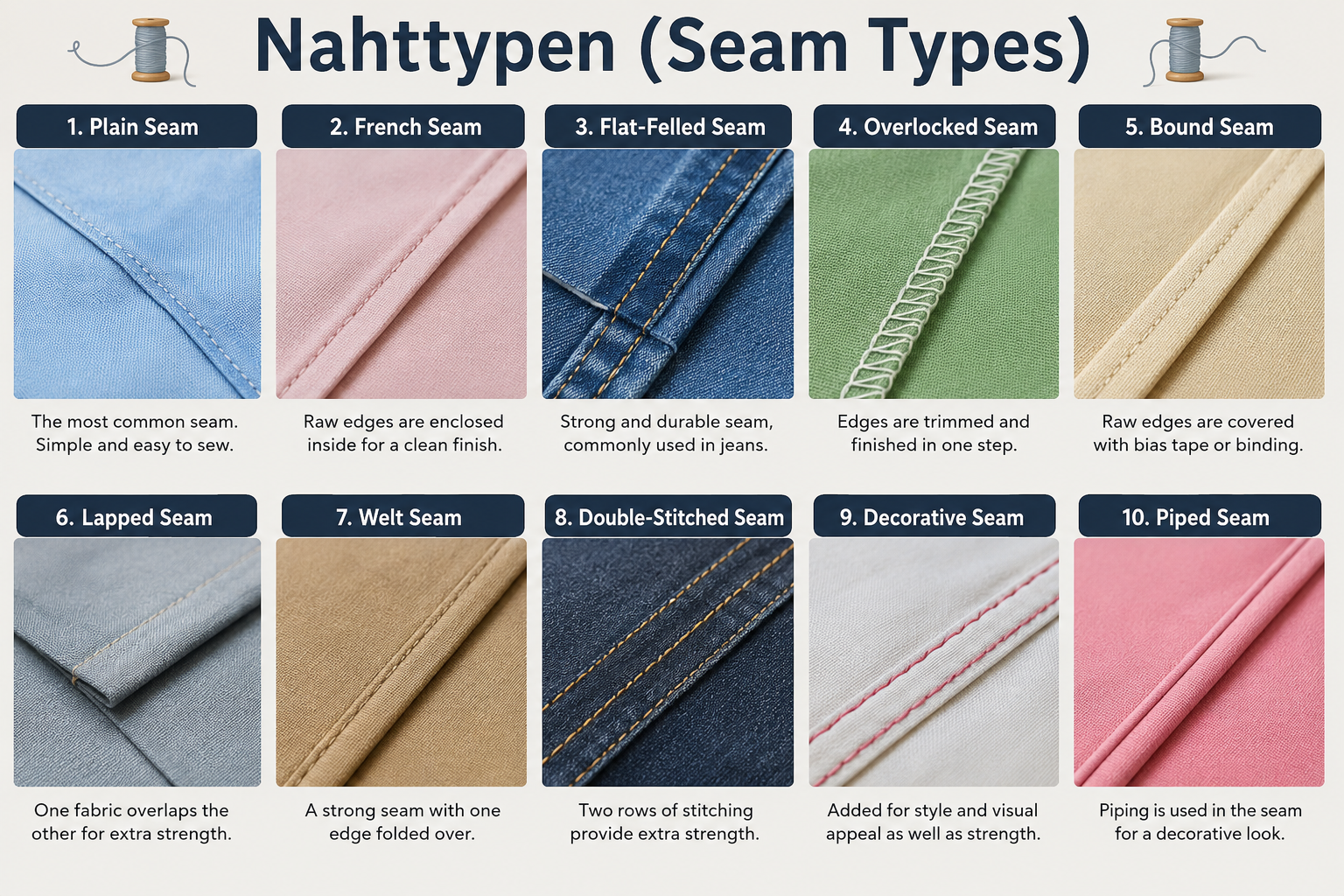
Sewing is much more than joining two pieces of fabric together. The type of seam you choose affects the strength, appearance, comfort, and durability of the finished product. In German, the term Nahttypen means types of seams. Whether you are a beginner, a fashion student, a tailor, or someone interested in garment construction, understanding different Nahttypen helps you create better-quality clothing and textile products.
Each seam has its own purpose. Some are designed for strength, while others provide a clean decorative finish. The right seam depends on the fabric, the purpose of the garment, and the desired appearance.
In this guide, you’ll learn the most common seam types, where they are used, and how to choose the best one for your sewing project.
What Does Nahttypen Mean?
Nahttypen is a German word that translates to “types of seams.”
A seam is the line where two or more pieces of fabric are stitched together. Different seam types are used depending on:
- Fabric thickness
- Stretchability
- Durability requirements
- Appearance
- Comfort
- Manufacturing process
Professional clothing manufacturers and fashion designers carefully choose seam types because they directly affect product quality.
Why Are Different Seam Types Important?
Choosing the correct seam offers many benefits.
Stronger Garments
Certain seams handle heavy stress better than others. Workwear, jeans, and outdoor clothing require strong seam construction.
Better Appearance
Some seams remain hidden inside garments, while decorative seams become part of the design.
Improved Comfort
Proper seams reduce irritation against the skin and improve overall comfort.
Longer Lifespan
High-quality seams prevent fabric from fraying and increase garment durability.
Common Nahttypen (Types of Seams)
Plain Seam
The plain seam is the most common seam used in sewing.
It joins two fabric pieces with a straight stitch before pressing the seam allowance open or to one side.
Best For
- Shirts
- Dresses
- Skirts
- Pants
- Everyday garments
Advantages
- Easy to sew
- Suitable for most fabrics
- Fast production
- Beginner-friendly
French Seam
A French seam encloses the raw fabric edges inside the seam.
Instead of exposing unfinished edges, they remain hidden, creating a neat interior finish.
Best For
- Lightweight fabrics
- Chiffon
- Silk
- Organza
- Delicate clothing
Advantages
- Elegant appearance
- Prevents fraying
- Professional finish
- Comfortable to wear
Flat-Felled Seam
This seam folds one seam allowance over the other before stitching.
It creates one of the strongest seams available.
Common Uses
- Denim jeans
- Shirts
- Workwear
- Outdoor clothing
Benefits
- Extremely durable
- Neat inside and outside
- Resists heavy wear
- Long-lasting
Overlocked Seam
An overlock machine trims and finishes fabric edges while stitching.
This method is common in ready-made garments.
Best For
- Knit fabrics
- T-shirts
- Sportswear
- Casual clothing
Advantages
- Prevents fraying
- Fast manufacturing
- Flexible seam
- Professional finish
Bound Seam
A bound seam covers raw edges using binding tape or fabric strips.
Common Applications
- Jackets
- Coats
- High-end garments
- Bags
Benefits
- Decorative finish
- Strong edge protection
- Premium appearance
Lapped Seam
A lapped seam overlaps one fabric edge over another before stitching.
It is commonly found in leather goods and heavy fabrics.
Advantages
- Strong construction
- Decorative appearance
- Suitable for thick materials
Double-Stitched Seam
This seam uses two rows of stitching.
It increases durability and provides extra reinforcement.
Used In
- School uniforms
- Children’s clothing
- Sportswear
- Heavy-duty garments
Decorative Seam Types
Not every seam exists only for strength.
Decorative seams improve the visual appeal of garments.
Examples include:
- Topstitched seams
- Piped seams
- Decorative twin-needle seams
- Contrast stitching
- Embroidered seam finishes
Fashion designers often use decorative seams to create unique clothing styles.
Choosing the Right Seam Type
Different projects require different seam constructions.
For Lightweight Fabrics
Choose:
- French Seam
- Narrow Seam
These reduce fraying while maintaining elegance.
For Stretch Fabrics
Use:
- Overlocked Seam
- Stretch Stitch
- Coverstitch
These allow fabric to stretch without breaking stitches.
For Heavy Fabrics
Recommended options include:
- Flat-Felled Seam
- Double-Stitched Seam
- Lapped Seam
These provide additional strength.
For Formal Clothing
Professional garments often use:
- French Seam
- Bound Seam
- Hand-finished seams
These improve the garment’s appearance and comfort.
Seam Types Used in Different Clothing
| Garment | Recommended Seam |
|---|---|
| T-Shirt | Overlocked Seam |
| Jeans | Flat-Felled Seam |
| Dress Shirt | Plain Seam |
| Silk Dress | French Seam |
| Jacket | Bound Seam |
| Sportswear | Overlocked Seam |
| Workwear | Double-Stitched Seam |
| Leather Jacket | Lapped Seam |
Common Sewing Mistakes
Even experienced sewists occasionally make mistakes.
Avoid these common problems:
Choosing the Wrong Seam
Not every seam works with every fabric.
Ignoring Seam Allowance
Incorrect seam allowance affects garment fit.
Poor Pressing
Pressing each seam after sewing creates a cleaner finish.
Incorrect Thread
Use thread suitable for both fabric weight and intended use.
Uneven Stitch Length
Consistent stitching improves both appearance and durability.
Tips for Better Seam Quality
To produce professional-looking seams:
- Match the seam to the fabric type.
- Test stitches on fabric scraps first.
- Use quality thread.
- Replace dull sewing machine needles.
- Press seams after each step.
- Finish raw edges whenever needed.
- Keep stitch lines straight.
- Maintain your sewing machine regularly.
These simple practices can significantly improve sewing results.
Understanding Seam Standards
In industrial garment manufacturing, seam types are often classified using international standards. These classifications help ensure consistency in clothing production and make it easier for manufacturers, designers, and quality inspectors to communicate about garment construction.
While home sewists may not need to memorize these standards, knowing that seam classifications exist can be useful if you study fashion design or work in the textile industry.
Final Thoughts
Understanding Nahttypen is an essential part of learning sewing and garment construction. Every seam serves a specific purpose, whether it is improving strength, preventing fraying, adding flexibility, or creating a decorative finish.
By selecting the appropriate seam for your fabric and project, you can produce clothing that not only looks professional but also lasts longer. Beginners can start with simple seams such as the plain seam, while more advanced sewists can explore French seams, flat-felled seams, bound seams, and decorative finishes to improve the quality of their work.
Learning different Nahttypen gives you greater confidence and helps you create garments that combine durability, comfort, and style.
FAQ
1. What does Nahttypen mean?
Nahttypen is a German word meaning types of seams. It refers to the different methods used to join pieces of fabric in sewing and garment construction.
2. Which seam is the strongest?
The Flat-Felled Seam is one of the strongest seam types. It is commonly used in jeans, workwear, and outdoor clothing because of its excellent durability.
3. Which seam is best for delicate fabrics?
The French Seam is ideal for lightweight and delicate fabrics such as silk, chiffon, and organza because it hides raw edges and creates a clean finish.
4. Why do different fabrics need different seam types?
Different fabrics have different weights, stretch levels, and durability requirements. Choosing the correct seam improves comfort, appearance, and the lifespan of the finished garment.
5. Is a plain seam suitable for beginners?
Yes. The plain seam is the easiest and most commonly used seam in sewing. It is suitable for most fabrics and is an excellent starting point for beginners.